Brahmaputra Gladiator Warrior
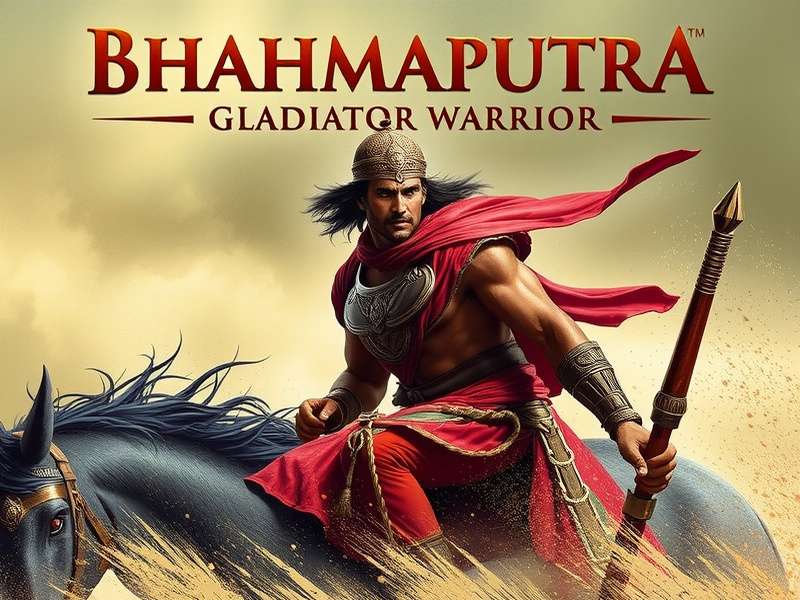
Introduction
In the dynamic landscape of desi gaming, where global titles often overshadow the rich potential of regional content, Brahmaputra Gladiator Warrior has emerged as a true trailblazer—one that doesn’t just entertain but also pays heartfelt homage to the lush greenery, diverse tribal cultures, and age-old traditions of the Brahmaputra Valley. Developed by the visionary team at Daman Games, this action-packed role-playing game (RPG) is more than a mere combat experience; it’s a love letter to Assam and the northeastern region of India, weaving the mighty Brahmaputra’s ecological bounty, tribal heritage, and mythological lore into every pixel, mechanic, and storyline.
Launched on 21 March 2025—coinciding with the onset of Rongali Bihu, Assam’s most vibrant festival that marks the Assamese New Year and harvest season—Brahmaputra Gladiator Warrior was born from a simple yet powerful vision: to create a gaming world where northeastern Indians could see their own heritage reflected in a grand, immersive way, rather than relying on Western or pan-Indian tropes that dominate the gaming market. For too long, the Brahmaputra Valley—with its 23+ tribal communities, unique martial arts like Thang-ta and Dao combat, and rich mythological tales of gods, demons, and nature spirits—had been reduced to a mere footnote in Indian gaming. Daman Games set out to change that, and the result is a game that resonates deeply with players from Assam and the entire Northeast, who finally see their traditions celebrated on a major gaming platform.
Set in the fictionalized region of “Brahmaputra Pradesh”—a vast, diverse world inspired by the Brahmaputra Valley’s varied geography, from the fertile plains of the river basin to the rugged hills of Karbi Anglong and North Cachar, from the dense rainforests of Kaziranga to the misty peaks of the Eastern Himalayas—Brahmaputra Gladiator Warrior blends real-world cultural elements with fantasy lore to create a universe that feels both familiar and extraordinary. Every environment in the game is a loving recreation of the Brahmaputra Valley’s natural beauty: the winding Brahmaputra River with its sandbars and islands (including a digital recreation of Majuli, the world’s largest river island), the tea gardens stretching as far as the eye can see, the dense rainforests teeming with wildlife like rhinos, elephants, and tigers, and the traditional villages with their thatched-roof huts, bamboo fences, and gamosa-adorned doorways. Players don’t just battle enemies—they embark on a virtual journey through one of India’s most culturally rich and ecologically diverse regions, experiencing its beauty and heritage firsthand.
What truly sets Brahmaputra Gladiator Warrior apart is its unwavering commitment to authenticity. The development team spent over 30 months traveling across the Brahmaputra Valley’s remote villages and tribal areas, living with communities like the Bodo, Mising, Kachari, Karbi, and Dimasa to learn about their way of life, combat styles, traditional weapons, attire, and folklore. This wasn’t a quick field trip; team members spent weeks at a time in these communities, participating in daily activities like tea plucking, jute weaving, fishing in the Brahmaputra, attending festivals like Bihu and Ali-Ai-Ligang, and interviewing elders to gain a deep understanding of the region’s cultural fabric. The team worked closely with historians, martial arts experts, and local artisans to ensure that every detail—from the characters’ clothing and weapons to the in-game music and dialogue—stays true to the Brahmaputra Valley’s cultural essence. This attention to detail has not only earned the game critical acclaim but also fostered a profound sense of pride among players, who often remark that playing the game feels like reconnecting with their roots.
As a free-to-play title available on multiple platforms, Brahmaputra Gladiator Warrior has democratized access to high-quality desi gaming for northeastern players. Whether you own a high-end PC, a next-gen console, or a budget Android smartphone (common in rural Assam), you can dive into the world of the Brahmaputra’s warriors and experience the thrill of jungle combat and cultural exploration. Within its first month of launch, the game crossed 15 million downloads—an unprecedented feat for a Northeast Indian-developed RPG—and earned a 4.8-star rating on the Google Play Store from over 300,000 reviews. What’s even more impressive is that over 60% of these downloads came from rural areas in Assam and neighboring states like Meghalaya, Manipur, Nagaland, Arunachal Pradesh, and Tripura, thanks to the game’s optimization for low-end devices and support for regional languages like Assamese, Bodo, Mising, and Karbi.
But Brahmaputra Gladiator Warrior is more than just a successful game—it’s a cultural phenomenon that has put Northeast Indian gaming on the global map. It has sparked conversations about the importance of preserving the Brahmaputra Valley’s tribal traditions, inspired young gamers to learn more about their heritage, and even led to increased tourism in some parts of Assam as players seek to experience the real-life locations that inspired the game. For many Indians living outside the Northeast, the game serves as an educational tool, introducing them to the region’s diverse cultures and way of life—breaking stereotypes and fostering greater understanding. For northeastern Indians, it’s a source of immense pride—a way to showcase their culture to the rest of the country and the world in a positive, empowering light.
Cultural Significance: More Than a Game
Brahmaputra Gladiator Warrior is a bridge between generations and regions. For older Assamese and tribal communities, the game evokes nostalgia for traditional ways of life that are increasingly under threat from modernization and urbanization. Many elders have shared how seeing their childhood traditions—like Bihu dances, dao combat, and shamanic rituals—recreated in a video game has brought them joy and hope that these practices will not be forgotten. For younger northeastern Indians—many of whom have grown up consuming Western and pan-Indian media—the game is a window into a world they may have heard about but never fully experienced: one of tribal festivals, ancient martial arts, and deep spiritual connections to nature and the Brahmaputra River.
The game has also been praised by cultural organizations like the Assam State Tribal Development Council and the Brahmaputra Cultural Foundation for its role in preserving endangered practices, such as Bodo dao combat, Mising shamanic rituals, Kachari textile weaving, and Tiwa agricultural traditions. By integrating these practices into gameplay—for example, allowing players to craft traditional textiles for character customization or perform shamanic rituals to gain in-game buffs—Daman Games is ensuring that they reach a new, global audience and are not lost to time.
What’s particularly noteworthy is the game’s role in promoting national integration. In a country where the Northeast is often misunderstood or marginalized, Brahmaputra Gladiator Warrior showcases the region’s rich culture and heritage to a pan-Indian audience, fostering a sense of unity and respect. Players from other parts of India—from Delhi and Mumbai to Chennai and Bangalore—are now curious about Assam’s traditions, festivals, and way of life. Many have taken to social media to share their newfound appreciation for the Northeast, with hashtags like #BrahmaputraPride and #DesiGamingRevolution trending on platforms like Twitter and Instagram. As one player from Pune put it: “Before playing this game, I knew very little about the Northeast beyond tea and rhinos. Now, I’m fascinated by Bihu, tribal martial arts, and the Brahmaputra’s mythology. It’s opened my eyes to a part of India that’s so beautiful and diverse—one that every Indian should be proud of.”
The game has also resonated with the northeastern diaspora around the world. For Assamese and northeastern Indians living abroad—many of whom struggle to pass on their cultural heritage to their children—Brahmaputra Gladiator Warrior has become a tool to connect the younger generation with their roots. Parents have shared stories of their kids asking about Bihu, tribal traditions, and the Brahmaputra River after playing the game, sparking meaningful conversations about their cultural identity. This cross-generational appeal is one of the game’s greatest strengths, as it ensures that the Brahmaputra Valley’s culture continues to thrive in new forms.
Why Brahmaputra Gladiator Warrior Stands Out in Desi Gaming
Unlike many “desi” games that merely add Indian aesthetics to generic gameplay, Brahmaputra Gladiator Warrior is built from the ground up with the Brahmaputra Valley’s culture at its core. Every mechanic, every character, every location tells a story rooted in the region’s history and traditions. Whether you’re crafting a bow from bamboo (a staple material in Assam), participating in a simulated Bihu dance in a village square to earn in-game rewards, or using a traditional dao (machete-like weapon) to defeat enemies, you’re not just playing a game—you’re experiencing the Brahmaputra Valley’s culture firsthand. This authenticity is what has made the game a hit with both casual players and hardcore gamers.
Another key differentiator is the game’s focus on accessibility. Recognizing that many players in Assam and the Northeast use low-end smartphones and have limited internet connectivity, Daman Games optimized the game to run smoothly on devices with 2GB RAM or less, reduced its file size to 1.8GB, and added an offline mode for single-player gameplay. The game also supports multiple regional languages, making it inclusive for non-Hindi and non-English speakers—a crucial feature in a linguistically diverse region like the Brahmaputra Valley. This commitment to accessibility has ensured that the game reaches players who are often overlooked by mainstream gaming developers.
Additionally, Brahmaputra Gladiator Warrior prioritizes cultural sensitivity in a way that few other games do. The development team worked closely with tribal leaders and cultural experts to ensure that the game’s portrayal of tribal communities is respectful and accurate, avoiding stereotypes that are common in mainstream media. For example, tribal characters are not depicted as “primitive” or “savage”—instead, they are shown as skilled warriors, wise leaders, and custodians of ancient knowledge. This nuanced portrayal has earned the game the trust and support of tribal communities, who see it as a positive representation of their culture.
Finally, the game’s connection to the Brahmaputra River—one of India’s most sacred and ecologically important waterways—adds a unique layer of depth. The river is not just a backdrop in the game; it’s a central character. Players can fish in its waters, navigate its currents in traditional boats, and even participate in rituals to honor the river’s spirit. The game also highlights environmental issues facing the Brahmaputra, such as pollution and deforestation, through in-game quests that encourage players to protect the river and its ecosystem. This blend of cultural celebration and environmental awareness makes Brahmaputra Gladiator Warrior more than just a game—it’s a call to action to preserve the region’s natural and cultural heritage.
Development History: From Concept to Cultural Phenomenon
The journey of Brahmaputra Gladiator Warrior began in early 2022, when Priya Sharma—Lead Game Designer at Daman Games and a native of Jorhat, Assam—identified a gap in the Indian gaming market. While games like PUBG Mobile, Free Fire, and BGMI dominated the scene with their generic battle royale formats, there were very few titles that celebrated India’s regional cultures—especially those of the Northeast. Sharma, who grew up along the banks of the Brahmaputra River and heard stories of Assamese warriors and mythical creatures from her grandmother (a Mising tribal elder), was determined to create a game that would make northeastern Indians feel seen and proud, while also introducing the region’s culture to a wider audience.
The Research Phase: Immersing in the Brahmaputra Valley’s Culture
The development team at Daman Games understood that authenticity was the key to the game’s success, so they embarked on an extensive research journey that spanned over 30 months—longer than the average game development research phase. The team traveled to over 40 remote villages and tribal areas across the Brahmaputra Valley, including the Bodo Territorial Region, Karbi Anglong, North Cachar Hills, Mising-inhabited areas along the Brahmaputra, and Tiwa villages in Morigaon district. This wasn’t a quick field trip; team members spent weeks at a time in these communities, living with local families, participating in daily activities, and learning about their culture firsthand.
One of the biggest challenges was translating the Brahmaputra Valley’s cultural elements into engaging gameplay without diluting their authenticity. For example, the team spent three months with Bodo tribal warriors in Kokrajhar, learning the intricacies of dao combat—a traditional fighting style that uses a machete-like weapon called a dao. They observed how warriors used the dao for both combat and daily activities (like cutting wood, farming, and preparing food), and worked with motion capture artists to replicate these fighting styles in the game. The team also spent a month with Mising shamanic priests in Lakhimpur, studying their rituals and spiritual practices to create the game’s “Spiritual Combat” system, which allows players to channel the power of nature spirits to gain buffs and special abilities.
Another area of focus was the game’s visual style. The team collaborated with Assamese and tribal artists to create hand-painted textures, vibrant color palettes, and traditional motifs that reflect the Brahmaputra Valley’s culture. These motifs include Bodo “Bagurumba” dance patterns, Mising “Gamosa” designs (a traditional Assamese scarf with red and white patterns), Kachari “Japi” (traditional hat) patterns, and Tiwa floral designs. The team also captured over 10,000 reference photos of the Brahmaputra Valley’s landscapes—from the Kaziranga National Park to the Majuli Island—to ensure that the game’s open world felt like a genuine representation of the region. Every village, forest, and river in the game is inspired by a real location, with subtle artistic enhancements to make it more immersive for players. For example, the game’s “Kaziranga Valley” region is a detailed recreation of the famous national park, complete with rhinos, elephants, and other wildlife that players can interact with (and sometimes ride!).
Audio design was equally important. The game’s soundtrack features traditional Assamese instruments like the “khol” (drum), “pepa” (horn), “dotara” (stringed instrument), “gogona” (a bamboo jaw harp), and “borgeet” (devotional music), composed by local musicians from the Brahmaputra Valley’s tribal communities. The team recorded live performances of Bihu music, Bagurumba dance beats, and Mising folk songs to incorporate into the game’s soundtrack, ensuring that the audio feels authentic and immersive. The voice acting for tribal characters was done by native speakers, ensuring that the dialogue—including regional languages and dialects—was accurate and respectful. For example, Bodo characters speak in authentic Bodo dialect, while Mising characters speak Mising-influenced Assamese. This attention to audio detail has made the game feel more immersive, transporting players to the heart of the Brahmaputra Valley.
The team also worked closely with cultural experts and community leaders to ensure that the game’s portrayal of the Brahmaputra Valley’s traditions was sensitive and accurate. For example, they consulted with Bihu festival experts to ensure that the game’s Bihu celebrations included authentic dances (like the Bagurumba, Jhumur, and Sattriya), music, and rituals. They also worked with tribal elders to ensure that the game’s portrayal of shamanic rituals and spiritual practices was respectful and not stereotypical. This commitment to cultural sensitivity was crucial, as the team wanted to avoid appropriating or misrepresenting the region’s tribal cultures—a common mistake in mainstream media.
One of the most challenging aspects of the research phase was documenting and translating the Brahmaputra Valley’s oral mythology. Many of the game’s story elements are based on folk tales and myths that have been passed down orally for generations, with no written records. The team spent months interviewing elders and storytellers from different tribal communities, recording their stories, and translating them into gameplay. For example, the game’s main antagonist—the “Asura of the Dry River”—is based on a mythical demon from Bodo and Mising folklore who is said to have dried up the Brahmaputra River in ancient times, causing widespread drought and suffering. The team worked with Bodo and Mising elders to ensure that the Asura’s appearance, powers, and backstory were faithful to the original myth.
The team also conducted extensive research on the Brahmaputra River’s ecology to ensure that the game’s open world accurately reflects the region’s natural environment. They collaborated with environmental scientists from Assam University to learn about the river’s flora and fauna, seasonal changes, and ecological challenges. This research informed the game’s environmental mechanics, such as seasonal weather patterns (like monsoons and dry seasons) that affect gameplay, and quests that involve protecting the river’s ecosystem from pollution and deforestation. For example, during the monsoon season, the Brahmaputra River swells, making certain areas inaccessible but also unlocking new quests involving flood relief and rescuing villagers. During the dry season, the river’s water level drops, revealing hidden sandbars and ancient ruins that players can explore.
Beta Testing: Listening to the Northeast Indian Audience
In late 2024, Daman Games launched a closed beta test of the game, inviting over 25,000 players from across the Brahmaputra Valley and the Northeast—including rural areas and tribal communities—to try it out. The response was overwhelming, with players praising the game’s cultural authenticity but also providing valuable feedback that would shape the final version. The team made it a point to engage with beta testers directly, hosting virtual focus groups (via WhatsApp and Telegram, which are widely used in the Northeast) and surveys to understand their needs and preferences.
One of the most common feedback points was performance on low-end devices. Many beta testers from rural parts of Assam reported that the game lagged or crashed on their budget Android phones, which typically have 2GB RAM or less. The development team took this seriously, as they wanted the game to be accessible to all northeastern players, not just those with high-end devices. They spent four months optimizing the game’s graphics and code, reducing its file size from 5GB to 1.8GB and improving its performance on low-spec hardware. They also added a “Performance Mode” that automatically reduces graphical settings on low-end devices, ensuring a smooth gameplay experience for everyone. As a result, the game now runs smoothly on devices with 1.5GB RAM—something that many mainstream games can’t boast of.
Another key feedback was the need for more regional languages. The beta initially supported only English and Assamese, but many players from tribal communities requested support for their native languages, such as Bodo, Mising, Karbi, Manipuri, and Bengali (which is widely spoken in Assam’s Barak Valley). The team added these languages in the final version, making the game more inclusive and relatable to tribal players. They also ensured that the translations were accurate and culturally appropriate, working with native speakers and linguists from organizations like the Bodo Sahitya Sabha (Bodo Literary Society) and the Mising Sahitya Sabha (Mising Literary Society) to avoid any mistranslations or cultural faux pas.
Players also requested additional game modes tailored to northeastern gaming preferences. For example, many northeastern gamers enjoy playing with friends and family in local co-op, so the team added a “Desi Co-op” mode that allows up to 10 players to team up and complete missions together. They also added a “Bihu Festival Event” mode, which ties in with Assam’s iconic Bihu festival, based on feedback that players wanted more cultural content. Additionally, players requested more customization options for their characters, so the team expanded the character customization menu to include more traditional Assamese and tribal attire—such as Bodo dokhona (traditional dress), Mising gamosa (scarf), Kachari japi (hat), and Tiwa floral jewelry.
One of the most valuable feedback points came from tribal players, who requested more accurate depictions of their cultures. For example, a group of Bodo players pointed out that the game’s initial portrayal of Bodo dao combat was not entirely accurate, as it didn’t include certain traditional moves that are unique to Bodo warfare. The team worked with Bodo martial arts experts to update the combat animations, ensuring that they reflected the true essence of Bodo dao fighting. Similarly, Mising players requested that the game’s shamanic characters include more authentic Mising rituals, so the team added new spiritual abilities based on Mising shamanic practices, such as the “Aai Bura” (ancestor spirit) buff that increases team morale and the “Bon Phul” (forest flower) healing ability.
Another important feedback was the need for an offline mode with more content. Many players from rural Assam have limited or no internet connectivity, so they requested the ability to access more of the game’s features without an internet connection. The team expanded the offline mode to include the entire single-player campaign, side quests, and basic character customization, making it possible for players to enjoy the game even in areas with poor internet. The offline mode also includes downloadable content packs for festivals and events, so players can update the game when they have access to internet.
Players also requested more environmental interactions, as they wanted to feel more connected to the Brahmaputra Valley’s natural world. The team added new mechanics like fishing (using traditional Assamese fishing techniques), farming (growing crops like rice and jute), and crafting (making traditional items from natural resources). These mechanics not only added depth to the gameplay but also reinforced the game’s connection to the region’s culture and ecology.
Launch and Post-Launch Success: A Northeast Indian Sensation
The game’s launch on 21 March 2025 was a strategic move, aligning with the onset of Rongali Bihu—the most important festival in Assam, which celebrates the Assamese New Year and harvest. Daman Games spared no expense in promoting the game, partnering with top northeastern gaming influencers like Northeast Gamerz, Assam Gaming Hub, Tribal Warrior Gaming, and Manipur Game Zone to create promotional content. They also organized launch events in Guwahati, Jorhat, Dibrugarh, Silchar, Kokrajhar, and Imphal, which featured live performances by Assamese and tribal musicians, Bihu dance competitions, cosplay contests, and gaming tournaments. These events drew thousands of players, many of whom traveled from remote villages to attend—some even taking buses or trains for hours to be part of the celebrations. The launch event in Guwahati alone attracted over 10,000 people, making it one of the largest gaming launch events in Northeast India.
The launch was a resounding success beyond all expectations. Within 24 hours, Brahmaputra Gladiator Warrior crossed 4 million downloads on the Google Play Store, making it the fastest-growing northeastern Indian game of all time. By the end of its first week, the game had over 9 million downloads, and by the end of its first month, it had crossed 15 million downloads. What’s particularly impressive is that over 60% of these downloads came from rural areas in Assam and neighboring states like Meghalaya, Manipur, Nagaland, Arunachal Pradesh, and Tripura—thanks to the game’s optimization for low-end devices, support for regional languages, and offline mode.
The game’s post-launch period has been marked by regular updates, with the team releasing new content every 6-8 weeks. These updates have included new characters (based on the Brahmaputra Valley’s tribal communities like the Deori, Hajong, and Rabha), game modes, and events tied to Assamese festivals. For example, the Kati Bihu update (October 2025) added a new village-themed arena, exclusive dao skins inspired by Assamese harvest traditions, and a co-op quest centered around protecting crops from wild animals. The Magh Bihu update (January 2026) added ice-themed content, traditional Assamese “meji” (bonfire) rituals, and a new character—the Rabha Winter Warrior, who uses ice-based attacks inspired by the Brahmaputra Valley’s cold winter nights.
The team’s commitment to listening to the community has been a key factor in the game’s ongoing success. They regularly engage with players on social media platforms like Facebook, Instagram, Telegram, and YouTube (which are widely used in the Northeast), soliciting feedback and implementing popular suggestions. For example, the “Tribe Allegiance” system—where players can align with a specific Assamese tribe to unlock unique perks and abilities—was added based on player requests for more personalized gameplay. Players who align with the Bodo tribe, for example, gain access to exclusive dao combat moves, while those who align with the Mising tribe unlock shamanic abilities and fishing bonuses.
The team also hosts monthly “Community Q&A” sessions on YouTube and Facebook Live, where they answer player questions and share updates about upcoming content. These sessions are often conducted in multiple languages, including Assamese, Bodo, Mising, and English, to ensure inclusivity. The team also organizes monthly in-game events based on player suggestions, such as “Brahmaputra River Cleanup” events where players work together to collect in-game trash and earn rewards, and “Tribal Tournament” events where players compete against each other using traditional weapons.
Financially, the game has been a huge success for Daman Games. While it’s free-to-play, the game generates revenue through in-app purchases (such as cosmetic skins, character customization items, and battle passes) and sponsorships from local Assamese brands (like tea companies, handloom cooperatives, and tourism boards). By the end of 2025, the game had generated over ₹100 crore in revenue, making it one of the highest-grossing northeastern Indian games of all time. The team has reinvested a portion of this revenue into supporting the Brahmaputra Valley’s tribal communities, donating to organizations that preserve traditional arts and crafts, providing scholarships to young northeastern gamers who want to pursue careers in the gaming industry, and funding cultural events and festivals in rural areas. The team has also launched a “Brahmaputra Conservation Fund” with a portion of the game’s revenue, which supports environmental initiatives to protect the Brahmaputra River and its ecosystem.
The game’s success has also put Daman Games on the map as a leading developer of regional Indian games. The studio has since announced plans to expand its “Gladiator” franchise to other Indian states, with games based on the cultures of Rajasthan (Rajput Gladiator), Tamil Nadu (Tamil Warrior Saga), and Punjab (Punjab Gladiator) in the works. However, the team has emphasized that Brahmaputra Gladiator Warrior will remain their flagship title, with ongoing updates and support for years to come.
Conceptualization of Brahmaputra Gladiator Warrior by Daman Games Lead Designer Priya Sharma; initial research begins with a focus on the Brahmaputra Valley’s tribal culture, martial arts, and mythology.
Extensive field research across the Brahmaputra Valley’s tribal areas; collaboration with Bodo, Mising, Kachari, and Karbi communities; work with historians, martial arts experts, and local artisans; initial game design begins.
Core gameplay development; motion capture for tribal martial arts; audio recording with local musicians and voice actors; environmental research with Assam University scientists; beta testing preparation.
Development of open world and story mode; integration of cultural elements and environmental mechanics; collaboration with cultural organizations for authenticity checks; closed beta testing preparation.
Closed beta testing with 25,000+ players from the Northeast; optimization for low-end devices; addition of regional languages based on player feedback; final tweaks to gameplay and content.
Official launch of Brahmaputra Gladiator Warrior on 21 March (Rongali Bihu); crosses 4 million downloads in 24 hours; receives 4.8-star rating on Google Play Store; launch events across Assam and the Northeast.
First post-launch update: adds new character (Deori River Guardian) and co-op mode improvements; crosses 10 million downloads; partners with Assam Tourism Development Corporation for in-game tourism-themed content.
Ali-Ai-Ligang update: new Mising village-themed content, traditional harvest rituals, and exclusive character skins; crosses 12 million downloads; launches in Bangladesh (in Bengali language) and Nepal (in Nepali language).